
Rainbow Cactus
Echinocereus pectinatus
A small desert cactus with combed spines, bright spring flowers, and a native story rooted in rocky Texas and POWO's Mexico Northeast and Mexico Northwest regions.
At a glance
- TypeLow, ribbed cactus
- NativeTexas and northern Mexico
- HeightOften only a few inches tall
- FlowersPink to magenta, spring
- SafetyObserve spines carefully
- Field markComb-like spine bands
Where it grows in the wild
POWO places Echinocereus pectinatus in Texas, Mexico Northeast, and Mexico Northwest, and Flora of North America treats the U.S. plant in Texas. The map uses Texas admin1 geometry plus POWO-backed TDWG geometry for both Mexican regions, avoiding the old problem of painting whole-country polygons for a desert cactus with a narrower native range.124
How to recognize it
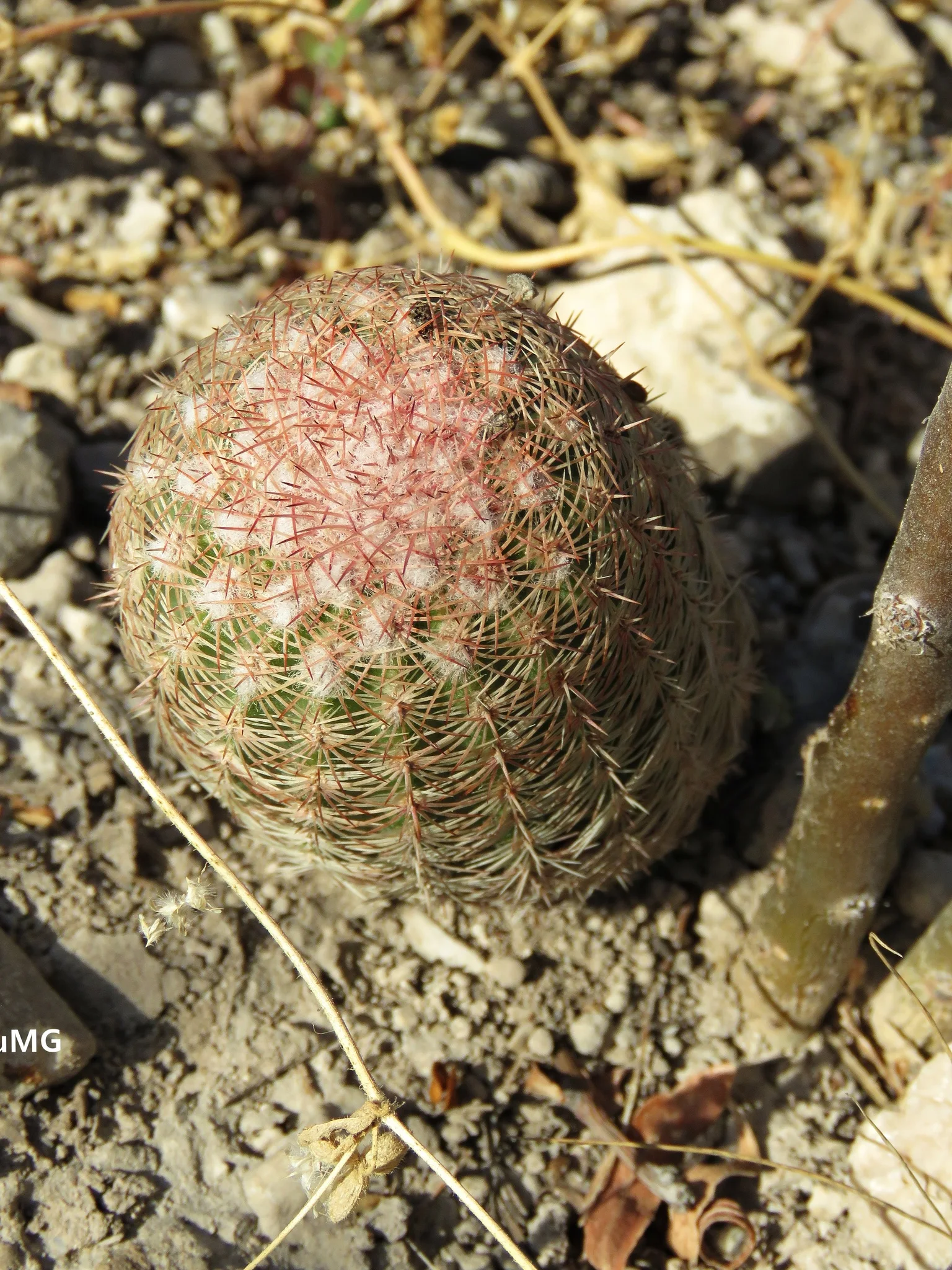
The common name can point to color, but the most useful mark is order: ribs, rows, and spines arranged like tiny combs.
Low ribbed stem
Plants are small and rounded to short-cylindrical, with vertical ribs that make the body look pleated.
Comb-like spine rows
FNA describes pectinate radial spines, meaning the spines lie in neat, comb-like rows across the ribs.
Large pink flowers
Spring flowers can be much larger than the cactus body suggests, opening in pink to magenta tones.
Desert-rock setting
Use habitat as context: rocky desert grassland, shrubland, slopes, and limestone or gravelly mineral soil fit the source set.
Lookalikes & how to tell them apart
Several hedgehog cacti can show pink flowers. Treat the spine pattern, rib count, flower color, and geography as a set rather than trusting one clue.
Rainbow hedgehog cactus
Often labeled Echinocereus rigidissimus. The common names overlap in public videos and plant collections. Echinocereus pectinatus is best checked by exact scientific name, range, and the pectinate spine pattern.
Scarlet hedgehog cactus
Red-orange flowers. Echinocereus coccineus and relatives tend toward red to orange flowers and different spine impressions, even when their low cactus form feels similar.
Texas rainbow cactus
U.S. variety context. Flora of North America treats the U.S. plant as var. wenigeri in Texas, so exact local records may use variety or regional common names.
A desert flower inside a comb of spines
The first thing to notice is the order. Rainbow cactus does not sprawl loosely across the ground or throw up leafy stems. It sits low, ribbed and compact, with pale spines laid across the green body in careful bands. The spines look almost combed into place. When a flower opens, the effect changes completely: a magenta bloom rises from a body that has spent the rest of the year looking guarded and quiet.
The first community record behind this page came from California on June 6, 2026. That point is a community discovery, not proof of a wild range. The native story is farther southeast. Plants of the World Online places Echinocereus pectinatus in Texas, Mexico Northeast, and Mexico Northwest, and Flora of North America treats the U.S. plant in Texas under var. wenigeri.12
That is why the map on this page is cautious. GBIF observations are useful, but they are records, not a complete range. The native overlay uses Texas and the two POWO-backed Mexican TDWG regions, not a whole United States or Mexico fill. Arizona and New Mexico reports under the common name rainbow cactus usually point to related taxa or older species concepts, so they are not painted as native range for this accepted species.
Recognition begins with the stem. Look for a small cactus body divided by ribs, then check the spines. FNA uses the word pectinate, meaning comb-like, for the radial spines. The name pectinatus carries the same idea. Instead of long scattered needles, the spines lie in close ranks across the ribs, making the plant look striped, pale, and armored at once.2
Flowers arrive as a brief answer to all that restraint. For the Texas variety, FNA gives March to May flowering. The blooms can be pink to magenta, large enough to make the cactus body seem smaller than it is. In desert and desert-edge places, such timing matters. A cactus may spend months holding water and waiting, then open a bright signal during the season when moisture, warmth, and insect movement overlap.
The ground matters too. POWO and FNA place this plant in dry southwestern habitats, including rocky grassland, shrubland, and limestone settings.12 This is not deep, leafy woodland soil. It is mineral ground where gravel, rock, and small pockets of organic matter do much of the work. A small cactus contributes modestly to that surface layer when flowers, fruits, or old tissue fall back, but its larger role is persistence: holding a living body close to heat, stone, and scarce water.
Spines are part of that story. They protect the water-storing stem from hungry animals and help shade the green surface. They are also the reason field observation should stay careful. The best photograph is one that shows the whole cactus, then a close view of the spine rows, without reaching into the plant.
If you find a cactus with a flower open, pause before naming it. Look at the ribs. Look at the spine bands. Notice whether the setting is wild, cultivated, rocky, or gardened. A rainbow cactus is a small plant, but it asks for slow looking, the kind that lets a desert body become more than a sharp outline against the ground.
Its place in the ecological web
Rainbow cactus compresses desert life into a small body: water storage, defense, flower timing, and mineral ground all meet in a plant that stays close to the surface.
Large flowers from a small body
The spring flower is a short seasonal invitation above a cactus built for slower survival. FNA places flowering in March to May for the U.S. variety, when desert insects are active after seasonal moisture.2
A pale spine shade
Dense pectinate spines help make the green stem less exposed. They create a visible barrier and a pale layer over the water-storing body.2
Mineral ground specialist
The source set places this cactus in rocky desert and grassland settings, including limestone. In such dry mineral ground, it is a modest organic contributor: fallen flowers, fruits, and old tissue return small bits of matter to the sparse surface layer.123
When to look
The cactus body can be visible year-round where conditions allow, while flowers are a spring event. Flora of North America gives March to May flowering for the U.S. variety.2
- Peak bloom
- Fading & dried heads
- Leaves out
Found one? Keep a field journal
Save this species to your journal, earn its badge, and see community discoveries on an approximate, privacy-safe map.
- 1Photograph the whole cactus so height, ribs, and growth form are visible.
- 2Add a close image of the comb-like spine rows without touching the plant.
- 3If flowers are present, capture one open flower and the cactus body together.
- 4Record the setting, especially rocky, gravelly, desert, or cultivated context.

Rainbow Cactus Badge
Earned when you identify this species in Leafari.
In the Leafari community
Curated videos
Grouped by purpose, with each video chosen for identification, care, or broader context.

The Colors of Echinocereus pectinatus from Detras
Echinocereus Online
Sources
Key facts and claims trace back to a named reference. Superscript numbers in the text link here.
- Plants of the World Online: Echinocereus pectinatus Taxonomy, native range, biome context
- Flora of North America: Echinocereus pectinatus var. wenigeri Morphology, flowering, habitat, Texas range
- SEINet taxon page: Echinocereus pectinatus Occurrence and habitat context
- GBIF species record: Echinocereus pectinatus Distribution observations
- Wikimedia Commons image: Echinocereus pectinatus pectinatus 175119862 Hero image
- Wikimedia Commons image: Echinocereus pectinatus pectinatus Supporting image
- YouTube: The Colors of Echinocereus pectinatus from Detras Curated video
- Leafari app records Product snapshot, first found, fun facts, badge, community discovery