
Yellow weeds in the lawn
Yellow lawn flowers are easier to compare when you look beyond color: flower shape, leaf shape, height, season, and growth habit all matter.

At a glance
What are the yellow weeds in my lawn?
Common yellow flowers in grass include dandelion, yellow woodsorrel, black medic, buttercups, and small clovers. First compare the whole growth form, then the flower head, leaflets, stem, and season; yellow petals alone are not enough for a confident name.
A yellow flower in the lawn looks obvious until you try to name it. From the porch, they all become one color. Up close, the differences start to appear: one plant rises from a rosette, one creeps in a mat, one has heart-shaped leaflets, one has clover-like leaves, and one has petals that shine like small varnished cups.
That is the first lesson of yellow lawn flowers. Color gets your attention, but color does not finish the identification. Yellow is a signal to kneel down, not a plant name.
This guide stays in the observation lane. It is not about what to eat, what to remove, what to spray, or what is safe for pets. It is a way to help families and new naturalists compare common yellow lawn flowers by visible clues.
What to notice first
Whole plant shape is a useful first clue. A dandelion usually grows from a low rosette, with leaves radiating from the base and one flower head held above them. The familiar round yellow head is made of many tiny florets, not a few broad petals.
Yellow woodsorrel looks different when you notice the leaves. University of Maryland Extension describes yellow woodsorrel as having clover-like leaves with three heart-shaped leaflets and yellow flowers on stalks. Those heart-shaped leaflets are important. From above, the plant may look clover-like, but the leaflet shape gives it another story.
Black medic is another low plant with three leaflets, and it can confuse people because it grows in turf and has small yellow flower clusters. Penn State Extension groups yellow woodsorrel, black medic, and white clover as common trifoliate lookalikes. For a family walk, “three leaflets” is not enough. Look at whether the leaflets are heart-shaped, oval, toothed, or arranged on a low mat.
Buttercups bring a different clue: shiny yellow petals. Some buttercup flowers look glossy in a way that catches light sharply. The leaves and growth habit matter too, but that gleam is often what makes a child point first.
Small yellow clovers and clover-like plants can be low, tight, and easy to miss until they bloom. A tiny yellow flower head on a mat is a different scene from a single dandelion head above a rosette.
Four yellow forms to compare in the grass
In a patch of yellow weed flowers in the grass, several different structures may share the color. These photographs show four exact species, but they are comparison anchors rather than a promise that every similar plant has the same name. Regional species vary, and a useful identification still combines the flower, leaves, stem, fruit, growth habit, season, and place.
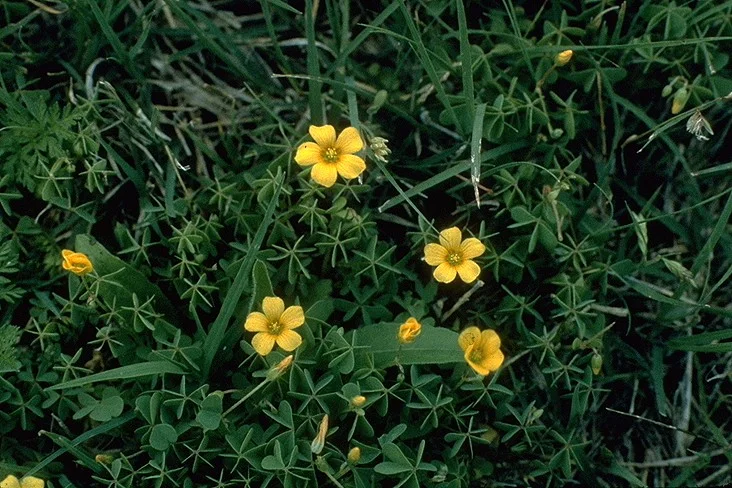
Slender yellow woodsorrel: five separate petals rise above three leaflets with heart-like outlines. The open flower and notched leaflet shapes separate it from the clustered blooms of black medick and suckling clover.
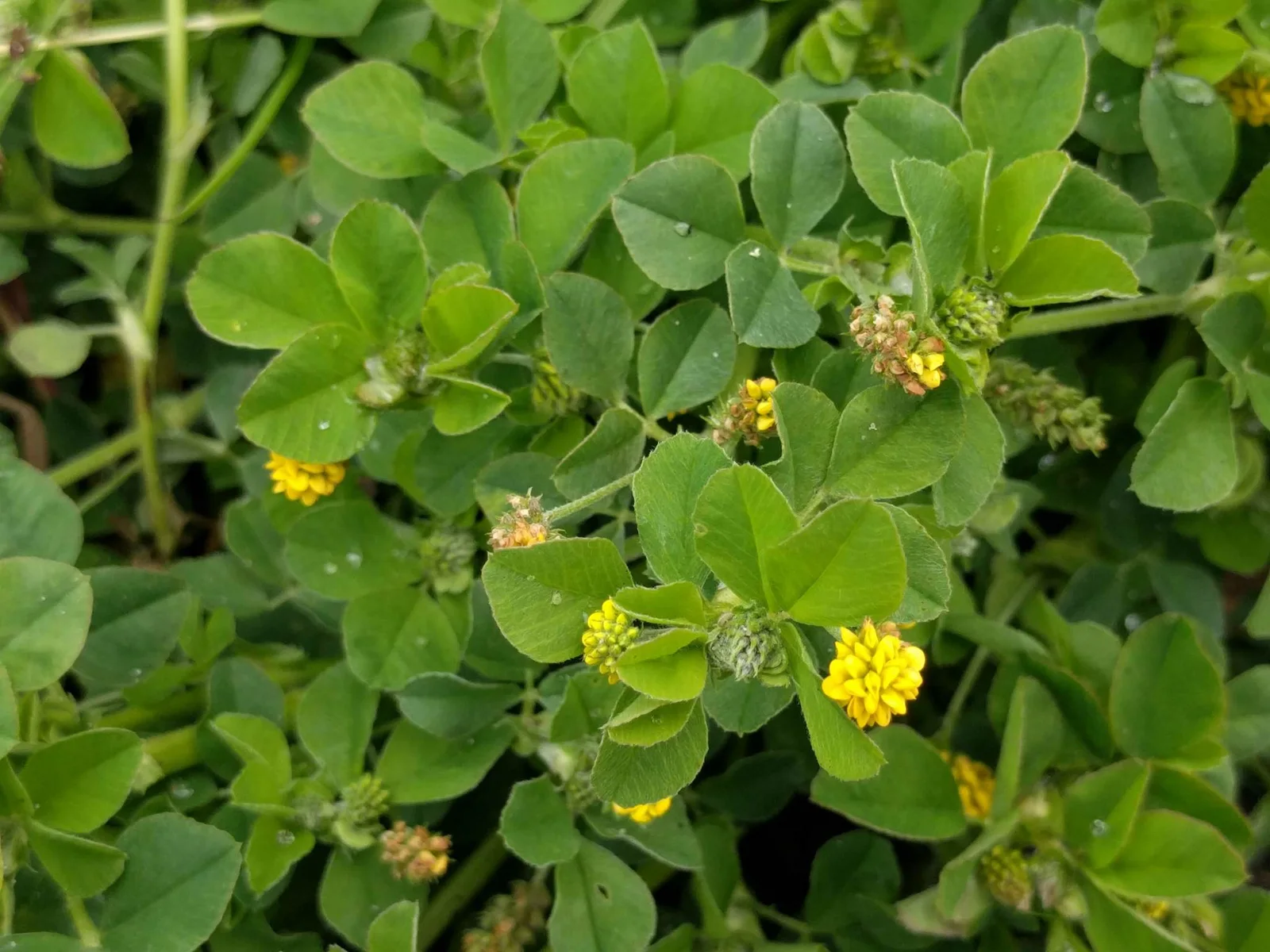
Black medick: many tiny flowers gather into a compact yellow head among oval leaflets. Dark, curled pods can become another clue later in the season.
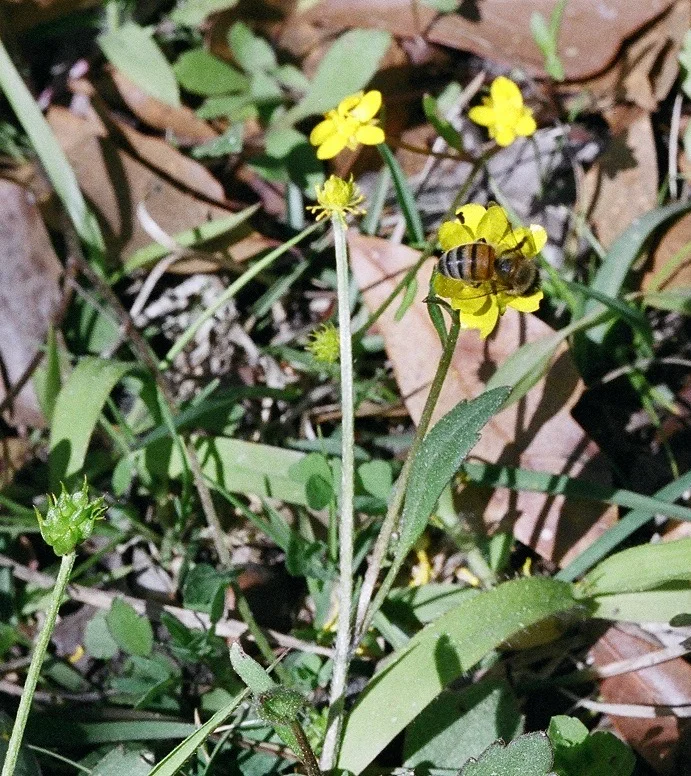
Hairy buttercup: separate glossy flowers stand above low leaves and hairy stems. The photograph also shows why flower shine is only one clue; the leaves and growth form still matter.
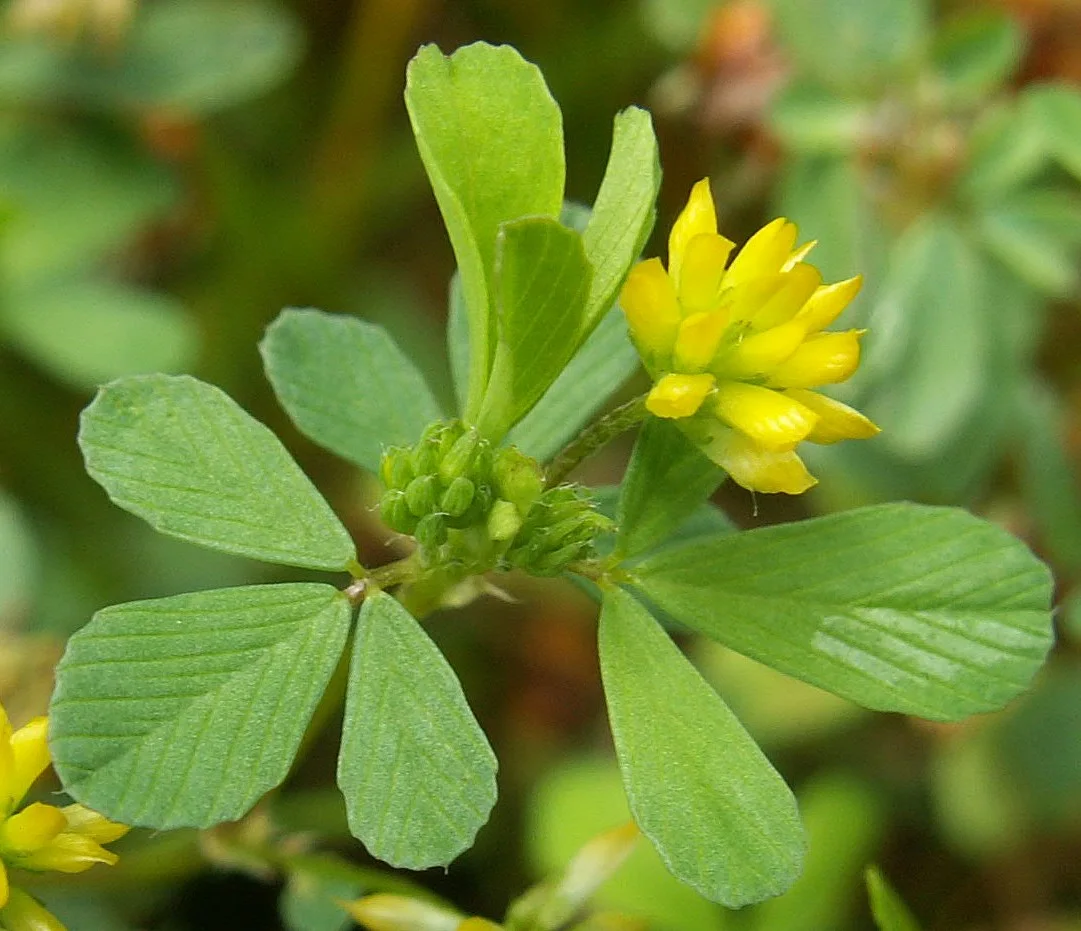
Suckling clover: tiny pea-family flowers form small heads beside three small leaflets. Compare the whole head and leaflet shape with black medick before settling on a name.
One rule becomes easier to remember in photographs: an open five-petaled flower, a compact many-flowered head, and a glossy buttercup are different constructions even when all three read as yellow from standing height.
Dandelion is the familiar anchor
Dandelion is often the plant people mean first. It has a bold flower head, a hollow-looking stem, and a basal rosette of toothed leaves. When it goes to seed, the round white seed head becomes another unmistakable stage.
Because dandelion is so familiar, it can accidentally flatten the rest of the lawn. A child may learn “yellow flower equals dandelion” and stop there. The better habit is to use dandelion as an anchor. If the plant has one taller flower head and a rosette, dandelion is a reasonable comparison. If the plant is a mat with tiny clusters, or the leaves are three heart-shaped leaflets, keep looking.
For a deeper species view, see the Taraxacum showcase.
The clover-like problem
Many yellow lawn mysteries are really leaf mysteries. Yellow woodsorrel, black medic, and small clovers can all make a person think “clover” at first. Michigan State University Extension notes that black medic, white clover, and yellow woodsorrel are common trifoliate broadleaf weeds that may flower in turf.
That word “trifoliate” simply means three leaflets. It is useful, but it is not enough. Yellow woodsorrel leaflets look heart-shaped, often with a little notch. Black medic leaflets are more oval and may show a tiny point at the leaflet tip. Clover leaves have their own rounded look and pattern. If you are learning with kids, ask them to draw one leaflet instead of the whole plant. The outline tells the story.
Read more species context on slender yellow woodsorrel, black medick, and suckling clover.
Why height and habit matter
A lawn is a compressed world. Mowing, foot traffic, soil, shade, and moisture all press plants into low forms. That makes height a useful clue and a tricky one. Some plants stay low by nature. Others are being kept low by the lawn.
Look at habit instead of height alone. The plant may make a rosette, a creeping mat, upright branching stems, or a tiny patch woven through grass. Notice whether each flower stands by itself or several small flowers cluster together.
Notice the leaf position too. Leaves may sit mostly at the base, alternate along stems, or group in threes. Flower stalks may rise from leaf axils, as University of Maryland Extension describes for yellow woodsorrel, or they may stand above a rosette.
These are slow questions, but they are the questions that prevent color-only naming.
A safe observation routine
Bring a notebook or camera and choose one small patch. Count how many different yellow forms you can find. Give each form a temporary name before trying a real name: rosette yellow, heart-leaf yellow, tiny-cluster yellow, glossy yellow. Temporary names help children notice differences without pretending to know more than they know.
Then compare one clue at a time. Flower first. Leaf second. Height third. Growth habit fourth. Season fifth. If two plants still look similar, leave them as lookalikes. A careful “not sure yet” is a better field note than a rushed label.
This is also why exact local identification can require a regional guide, an extension office, or a botanist. Lawn plants vary by region, and several yellow-flowered species can overlap in the same season.
The lawn as a field site
The word “weed” can make a lawn sound like a problem before anyone has looked closely. But to a young naturalist, the lawn is often the nearest field site. It is where small flowers appear between chores, where bees visit low blooms, where seed heads change from day to day, and where one color becomes five different plants.
The best field note starts by noticing that difference. Yellow is bright enough to call you over. The rest of the plant asks you to slow down.
Sources
- University of Maryland Extension: Oxalis, Yellow Woodsorrel Weeds Accessed 2026-09-01
- Penn State Extension: Three Weeds with Three Leaflets Accessed 2026-09-01
- Michigan State University Extension: Pesky broadleaf weeds flowering in turf Accessed 2026-09-01
- Go Botany: Slender Yellow Woodsorrel Accessed 2026-09-01
- NC State Extension: Black Medick Accessed 2026-09-01
- NC State Extension: Hairy Buttercup Accessed 2026-09-01
- University of Oxford Plants 400: Suckling Clover Accessed 2026-09-01
Image credits
- Top image Robert Engelhardt · CC BY-SA 3.0
- In the photo comparison section Clarence A. Rechenthin, USDA NRCS · Public domain
- In the photo comparison section Michel Langeveld · CC BY-SA 4.0
- In the photo comparison section sonnia hill · CC BY 2.0
- In the photo comparison section Kenraiz · CC BY-SA 3.0
More Field Notes
 Praying Mantis Egg Case: How to Identify an Ootheca on a Twig
  Why Pine Cones Open When Dry and Close When Wet
  Black and Orange Fuzzy Caterpillar: Woolly Bear ID Guide
Read it. Then go find it.
Open Leafari on your next walk and see what has been waiting in plain sight.