
The hydrangea color code
Bigleaf hydrangeas can turn a familiar garden walk into a lesson about soil, roots, minerals, and the quiet chemistry beneath a flower head.
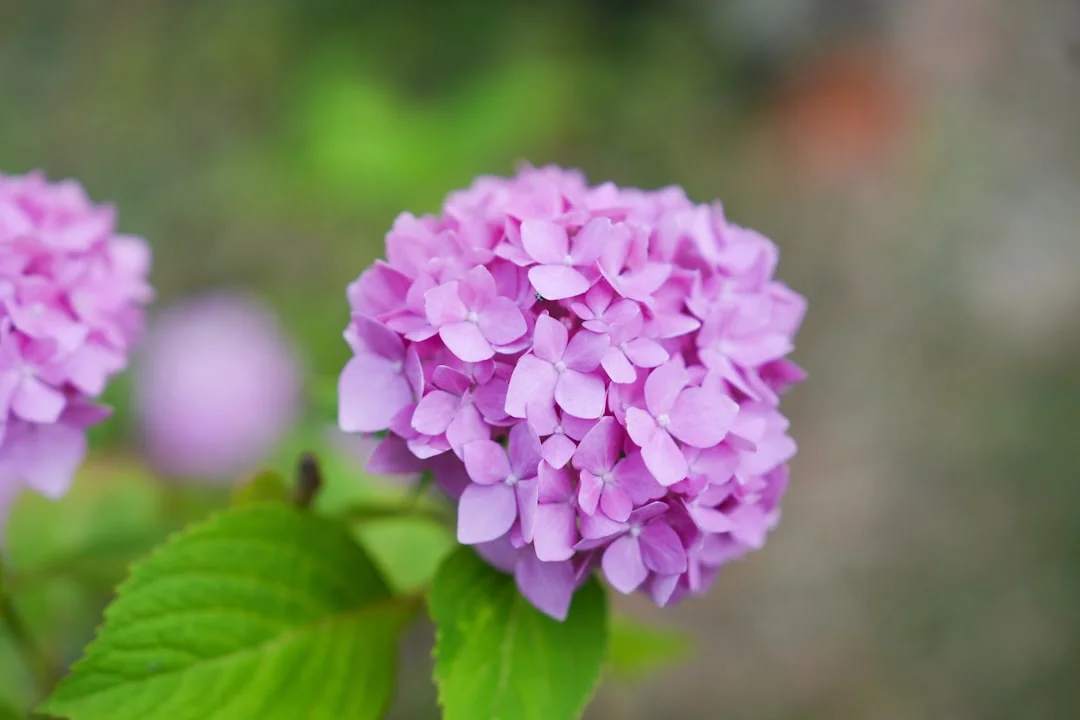
There is a certain kind of summer walk that seems to slow down beside a hydrangea. The shrub is usually planted where people pass it often: near a porch, beside a gate, along a fence, or at the corner of a house where rainwater has its habits. One plant may be blue as a washed sky. Another, only a few yards away, may be pink. A third may hold purple blooms that look undecided, as if the plant has not settled on an answer.
That color can feel like a trick at first. Gardeners trade advice about coffee grounds, lime, special powders, rusty nails, and old family methods. Children notice the simpler mystery. Why is this one blue and that one pink?
A good question starts with the eyes. You do not need a lab coat to begin. You need one shrub, another shrub, and the willingness to wonder why two plants that look so similar can speak in different colors. The answer leads down into soil, where roots meet minerals, water, organic matter, and the tiny living workers that keep a garden from being merely dirt.
Why the soil gets involved
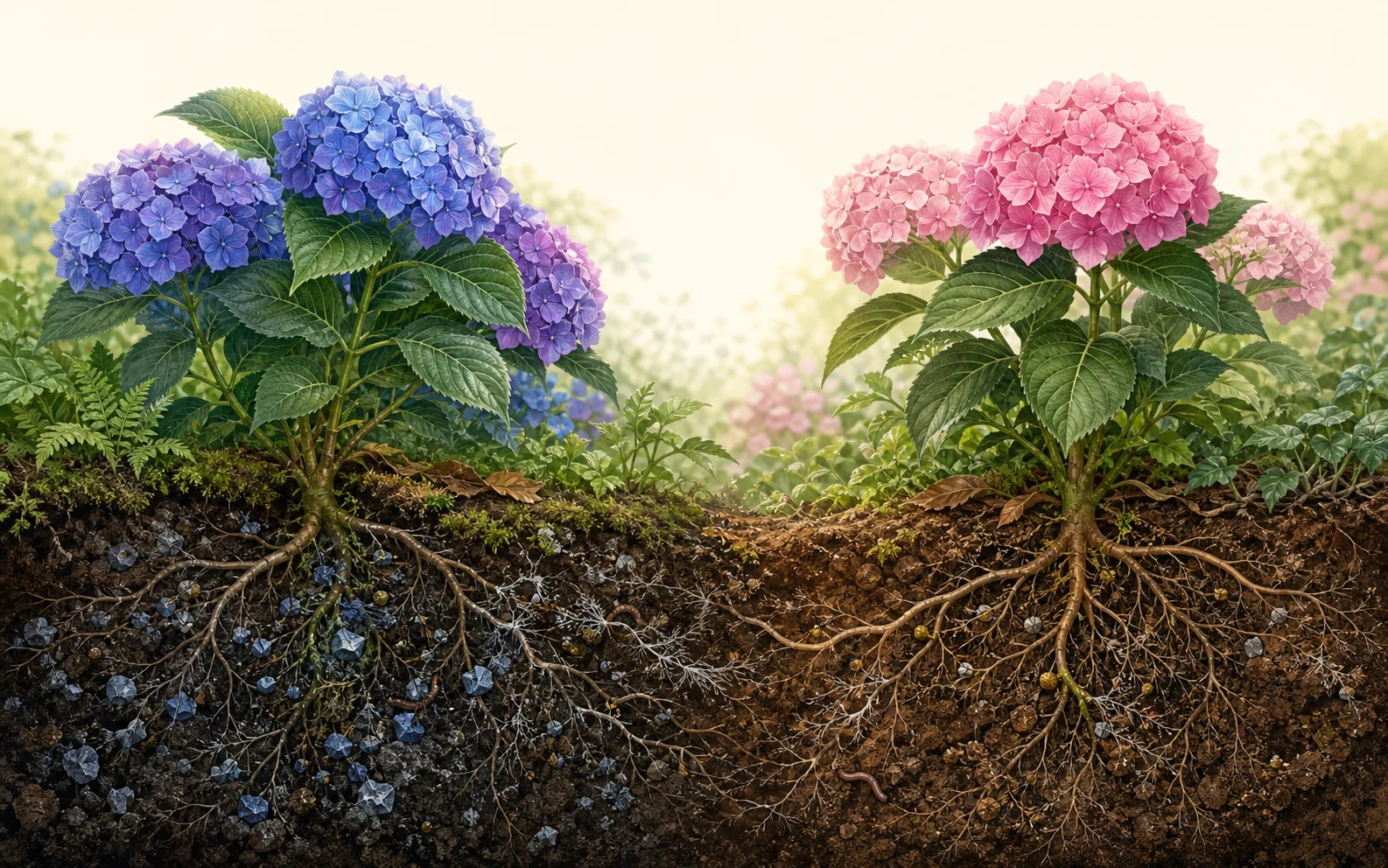
Here is the short version: many bigleaf hydrangeas can shift toward blue when aluminum is available to the plant. Acidic soil often makes that aluminum easier for roots to take up. In less acidic soil, aluminum tends to be less available, and many of those same hydrangeas lean pink.
Useful explanations can become too tidy. A hydrangea is not a mood ring for pH. The plant is alive, which means the color is the result of several things happening together. Soil acidity matters. Aluminum availability matters. The variety of hydrangea matters. Water, age, amendments, and the particular history of that patch of ground all have a say.
Think of the flower as the visible edge of a much larger conversation. Below the leaves, roots are exploring a dark, damp world. They are not simply drinking water like straws. They are exchanging, absorbing, responding. The soil holds minerals in some conditions and releases them in others. Acidity changes what becomes available. A blue flower, then, is not only a blue flower. It is a trace of underground permission.
American Scientist describes the color shift as a relationship among hydrangea pigments, aluminum, and soil conditions. NC State Extension gives the garden version of the same idea: acidic soils tend to favor blue flowers, while alkaline soils tend to favor pink. The most interesting part is the gap between those two sentences. In that gap lives the living garden, with all its complications.
How the plant turns chemistry into color
A flower head is doing more than decorating the yard. In bigleaf hydrangea, pigments in the flowers can interact with aluminum in ways that shift what our eyes see. The plant does not decide to become blue in the human sense. It follows chemical possibilities made available by soil and root.
This is what makes the shrub such a generous teacher. It takes a process most of us cannot see and lifts one result into the open. A root does its work in darkness. A mineral becomes available or does not. A pigment complex changes. Then, weeks later, a child on a sidewalk points and says, “That one is blue.”
Cultivar differences teach humility too. White hydrangea forms usually remain white. Some cultivars respond strongly to soil changes, while others barely shift. Even a plant that can change color may not do so evenly. One side of a shrub may sit near a foundation, another beside a mulch bed, another under the drip line of a roof. The root zone is not a single neat bowl. It is a patchwork.
Instead of using the flower as a pH reading, ask what conditions it might be revealing. That small change matters. It turns a fact into an investigation.
What to notice outside
Start with color, but do not stop there. Notice whether the blooms are pink, blue, purple, or white. Look for variation on the same plant. Compare the newest flowers with the older ones. Watch whether the blooms fade toward green, cream, or brown as they age. A hydrangea flower head changes through time, and some of the most useful clues appear only if you visit more than once.
Now step back and read the setting. Soil near old concrete, brick, or foundations may differ from soil under trees or in a bed that has been mulched for years. Water matters too. A hydrangea near a downspout is living a different life from one in a drier corner. The plant may look like a single object, but its roots are reading a place.
If you are learning with kids, try making a simple observation chart. Do not begin by changing the soil. Begin by noticing. Write down bloom color, light, nearby structures, soil moisture after rain, and whether the plant is a mophead or lacecap. If there are two hydrangeas nearby, compare them. If there is only one, visit it every week for a month.
This kind of watching is slower than a quick answer, but it is better science. It asks the observer to separate evidence from guessing. You can see flower color. You can see shade. You can feel whether the soil is damp at the surface. You cannot see aluminum availability directly, at least not with your eyes. That hidden part is where testing, sources, and careful language come in.
Why this common shrub keeps surprising us
Hydrangea color feels memorable because it crosses a boundary. We are used to thinking of flowers as displays above ground. Hydrangea reminds us that a flower can also be a message from below.
None of this makes the plant magical. It makes it more interesting than magic. Magic ends the question. Chemistry keeps it open. Soil is not a passive background. It is a living, changing medium full of minerals, roots, fungi, bacteria, water films, decaying leaves, and the leftovers of human care. A garden bed records what has happened to it. Compost, irrigation, lime, sulfur, old mortar, fallen leaves, and years of rain all become part of the story.
Bigleaf hydrangea simply gives that story a color. Pink and blue are the part we can see from the sidewalk. Below them is the quieter part: exchange, availability, response.
There is a larger species story too. Bigleaf hydrangea is native to Japan and became a widely planted garden shrub far beyond its original range. Its color-changing reputation helped make it famous, but the plant is more than that one fact. It is a rain-season shrub, a cultivated object, a pollinator tradeoff, a chemistry lesson, and a reminder that people carry plants with them because plants change how places feel.
For more on that wider biography, read the bigleaf hydrangea species showcase.
A question with roots
Next time you pass a hydrangea, pause long enough to let the easy answer become a better question. The blue bloom is not simply blue. The pink one is not simply pink. Each is a surface sign of roots meeting a particular patch of earth.
Maybe that is why this lesson works so well. It begins with beauty, then asks for attention. It gives a child something to point at and an adult something to reconsider. It makes the hidden world under a shrub feel close, not abstract.
A garden is full of these invitations. The hydrangea is only one of the more colorful ones.
Sources
- American Scientist: Curious Chemistry Guides Hydrangea Colors Accessed 2026-05-31
- NC State Extension: Hydrangeas, Hallmarks of the Southern Garden Accessed 2026-05-31
- Purdue Arboretum Explorer: Hydrangea macrophylla Accessed 2026-05-31

Read it. Then go find it.
Open Leafari on your next walk and see what has been waiting in plain sight.